
No Kids? You Still Need an Estate Plan — Here’s Why
Most people assume estate planning is something you do after you have kids. But if you’ve made it to this article, you probably already suspect that’s not the whole story.
Here’s the truth: if you have assets, opinions about your medical care, or people you care about — and you don’t have a current estate plan — Colorado law will make your most important decisions for you. Not your partner. Not your closest friend. Not the charity you’ve supported for years. The state.
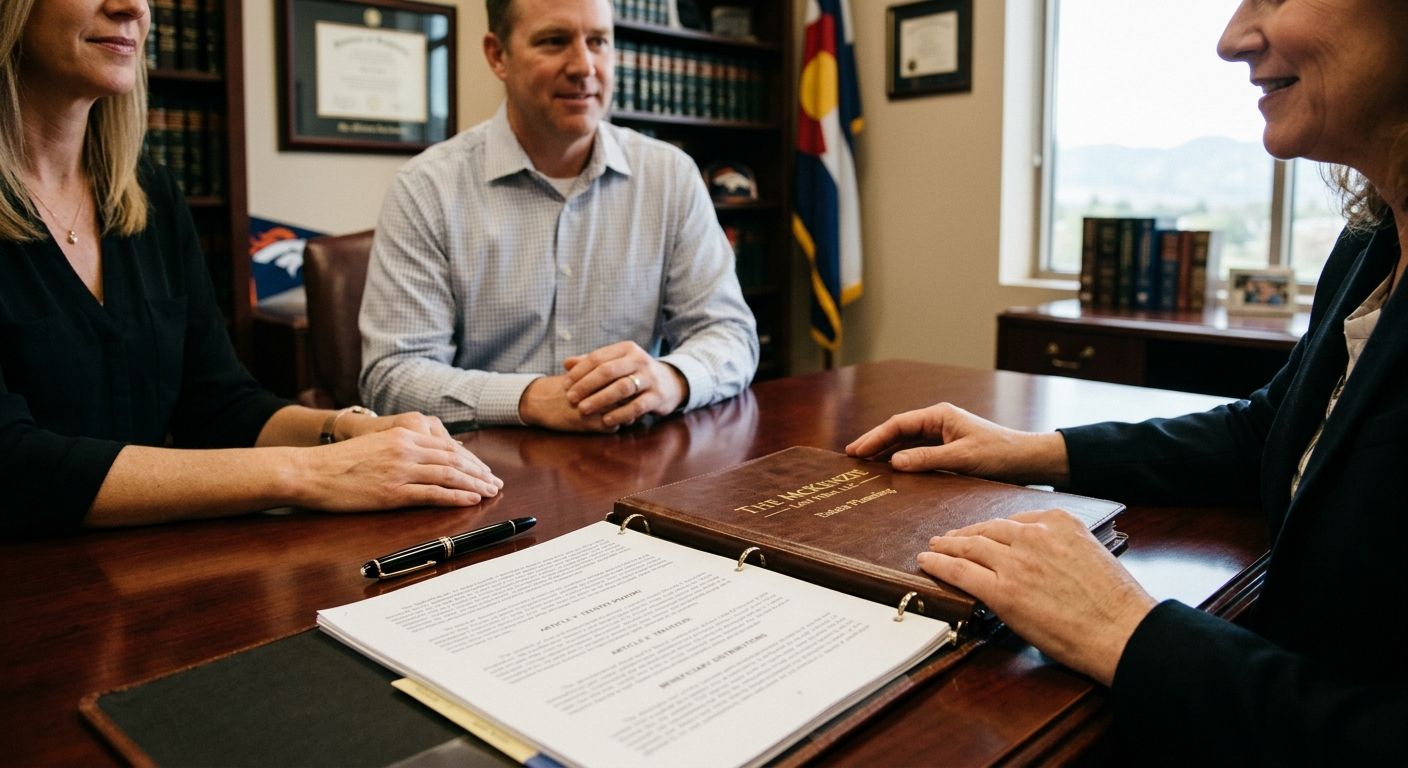
At The McKenzie Law Firm, we’ve worked with many clients who don’t have children and initially wonder whether they really need a formal plan. They do. In many ways, the need is even more urgent — because without children as a default safety net, there’s less structure to catch you if you haven’t created it yourself.
What Happens If You Don’t Have a Plan in Colorado?
Colorado has a default set of rules — called intestacy laws — that determine who gets your property if you die without a will. If you have no spouse and no children, those assets typically pass to your parents, then to your siblings, and then to more distant relatives. If no eligible relatives can be located, your estate could eventually be distributed entirely to the State of Colorado.
That may not reflect what you want at all. Maybe you’d prefer your assets to go to a close friend who’s been like family. Or a cause you’ve dedicated time to. Or a sibling — but only one of them. Without a plan, none of that nuance exists.
You Get to Choose Who Matters
One of the most meaningful parts of estate planning for individuals without children is the freedom to define your own legacy. Your beneficiaries can be:
- Close friends or chosen family
- Extended family members who are important to you
- Charitable organizations you believe in
- Religious or educational institutions
- Caregivers who have made a difference in your life
A properly drafted estate plan gives you the legal tools to divide assets however you choose — and to make sure those choices are honored.
Estate Planning Isn’t Just About Death
This is where many people — especially those without children — get blindsided. A significant part of estate planning deals with what happens if you’re alive but unable to make decisions for yourself.
If you became incapacitated tomorrow, who would manage your finances? Who would make your medical decisions? Who would know what kind of care you’d want — or wouldn’t want?
Without the right documents in place, the answer might be “no one you’d have chosen,” and a court will decide. Three key documents address this:
- Financial Power of Attorney — designates someone to manage your accounts, bills, and financial affairs
- Medical Power of Attorney — names a trusted person to make healthcare decisions on your behalf
- Living Will (Advance Directive) — documents your wishes about end-of-life care so those decisions don’t fall entirely to someone else
Without children who might naturally step in, these appointments matter even more. The person best positioned to advocate for you is whoever you’ve designated in advance — not whoever shows up first.
Charitable Giving Can Be a Centerpiece of Your Plan
For many people without heirs, leaving a meaningful gift to a cause they care about is a central motivation for planning. The good news: your estate plan can be structured to make charitable giving intentional, tax-efficient, and lasting.
Options include specific bequests in a will, naming a charity as a beneficiary on retirement accounts or life insurance, establishing a charitable trust, or setting up a donor-advised fund. Each approach has different implications for timing, taxes, and flexibility — which is why it’s worth having a conversation with an attorney and your financial advisor together.
A Clear Plan Prevents Conflict
When there are no obvious heirs, ambiguity can invite conflict. Extended relatives who barely knew you may suddenly have strong opinions. A clear, legally valid estate plan removes the guesswork and reduces the likelihood of disputes — leaving the people handling your estate with straightforward instructions rather than difficult conversations.
Your Plan Should Evolve With Your Life
Relationships change. Financial situations shift. What made sense five years ago may not reflect who you are today or what you want your legacy to be. We recommend reviewing your estate plan every 3 to 5 years, or whenever you experience a significant life change.
Ready to Build a Plan That Reflects Your Life?
At The McKenzie Law Firm, we work with Colorado residents at every stage of life — including those without children — to create estate plans that are thoughtful, personalized, and built to hold up when it matters most.
Our flat-fee pricing means you’ll know exactly what you’re paying before we start. Our process is designed to be straightforward, not overwhelming. And our team is here to answer your questions every step of the way.
Schedule your initial evaluation today and find out what a plan built around your life — not a template — looks like.
Call us at (720) 821-7604 or schedule a meeting here.
The McKenzie Law Firm, LLC practices law exclusively in Colorado. This post is for general informational purposes only and does not constitute legal advice. Please consult a qualified attorney regarding your specific situation.