

By The Time You Need Asset Protection, It's Too Late
dan • December 17, 2022
I woke up to two news stories this morning about famous people suffering the worst consequence possible for improper attempts to protect their assets.
The first story was about all-time great tennis player Boris Becker being released from prison after serving 8 months of a two and a half year sentence. Becker’s prison sentence arose out of his effort to hide assets after being declared bankrupt as a result of a large unpaid loan against a property that he owned in Mallorca, Spain.
Although bankruptcy is an experience that most of us hope desperately to avoid, it actually is a protection for you. It wipes away your debts. But in exchange for that release, you are agreeing to give up control of your assets to a bankruptcy trustee who determines who gets what. A critical part of this deal is full disclosure of all assets. Attempting to gain the benefits of bankruptcy without telling your bankruptcy trustee about certain assets can be a felony, as Mr. Becker learned the hard way.
The other asset protection story in my feed concerned reality TV stars Todd and Julie Chrisley, who were sentenced to 12 and 7 year prison sentences , respectively, also arising out of an attempt to hide money from a bankruptcy and income from the IRS.
We have a number of clients ask us about both asset protection and tax minimization. There is nothing inherently wrong about doing either. Most of us take at least a few steps to lower our tax bills and to protect our assets from being lost to lawsuits, divorce, or other unexpected financial disasters.
The first story was about all-time great tennis player Boris Becker being released from prison after serving 8 months of a two and a half year sentence. Becker’s prison sentence arose out of his effort to hide assets after being declared bankrupt as a result of a large unpaid loan against a property that he owned in Mallorca, Spain.
Although bankruptcy is an experience that most of us hope desperately to avoid, it actually is a protection for you. It wipes away your debts. But in exchange for that release, you are agreeing to give up control of your assets to a bankruptcy trustee who determines who gets what. A critical part of this deal is full disclosure of all assets. Attempting to gain the benefits of bankruptcy without telling your bankruptcy trustee about certain assets can be a felony, as Mr. Becker learned the hard way.
The other asset protection story in my feed concerned reality TV stars Todd and Julie Chrisley, who were sentenced to 12 and 7 year prison sentences , respectively, also arising out of an attempt to hide money from a bankruptcy and income from the IRS.
We have a number of clients ask us about both asset protection and tax minimization. There is nothing inherently wrong about doing either. Most of us take at least a few steps to lower our tax bills and to protect our assets from being lost to lawsuits, divorce, or other unexpected financial disasters.
But in the wrong circumstances, this kind of planning not only won’t work, but could be a crime! By “wrong circumstances,” I am referring to situations where someone retitles assets, or tries to get rid of them by giving them away to someone close to them, quickly because a problem has already arisen. There can be lots of reasons to move assets out of your name, but doing so for the sole purpose of avoiding creditors can be “fraudulent conveyance.” Your best outcome in a fraudulent conveyance situation is that the transaction gets reversed and the assets get “clawed back.” The worst outcome is a criminal conviction.
when is it too late?
Determining when you know you have creditors, and asset protection has crossed over from prudent planning to potential crime, can be more difficult than you might think. Let’s consider the sequence of events that take place when you get in a car accident:
When, in that sequence of events, should you have reasonably become aware that you might have someone coming after you for money? Arguably, it was the moment you got in the accident, and taking steps to get assets out of your name even immediately after that, before any of the other events happen, could draw suspicion, if not constitute a crime. As you progress through that sequence of events, it only gets more and more suspicious, and more and more likely to be criminal. There is a similar progression, from “maybe” to “definitely happening,” for an impending divorce, a messy business breakup, a contract dispute, etc.
Taking steps to protect your assets is like buying insurance. Once you need it, it’s too late. You can’t buy insurance after your kitchen has caught fire, and you can’t move assets around after you have become aware that someone might be coming after you for money. The best time to consider asset protection is when you are least motivated to do it – when no problems seem to be on the horizon. Well before that if possible.
Even if started before problems arise, your chance of successfully proving that an asset protection structure was in place for reasons other than evading creditors is a lot more likely to hold up if it has been in place for years once a problem does arise, than if it was just implemented. Going back to our car accident example, even though you had no idea you were going to be in a car accident, having moved assets into asset protection trusts or business structures the day beforehand just doesn’t look good, and it is easier for a judge to feel okay about undoing it. Asset protection strategies are much likelier to work as intended after they been in place for years.
Supposedly, there is a Chinese proverb about how the best time to plant a tree was 20 years ago, but the second best time is now. That wisdom applies to asset protection too. If you find yourself tempted to start taking steps after a problem has already arisen, remember My. Becker and the Chrisleys.
- You get in the accident.
- You realize there might be property damage or injuries.
- The police file a report and maybe issue you a ticket.
- You get notified that the other driver has made an insurance claim.
- You receive a demand letter from a lawyer.
- A lawsuit is filed against you.
- You lose the lawsuit and have a judgment entered against you.
When, in that sequence of events, should you have reasonably become aware that you might have someone coming after you for money? Arguably, it was the moment you got in the accident, and taking steps to get assets out of your name even immediately after that, before any of the other events happen, could draw suspicion, if not constitute a crime. As you progress through that sequence of events, it only gets more and more suspicious, and more and more likely to be criminal. There is a similar progression, from “maybe” to “definitely happening,” for an impending divorce, a messy business breakup, a contract dispute, etc.
Taking steps to protect your assets is like buying insurance. Once you need it, it’s too late. You can’t buy insurance after your kitchen has caught fire, and you can’t move assets around after you have become aware that someone might be coming after you for money. The best time to consider asset protection is when you are least motivated to do it – when no problems seem to be on the horizon. Well before that if possible.
Even if started before problems arise, your chance of successfully proving that an asset protection structure was in place for reasons other than evading creditors is a lot more likely to hold up if it has been in place for years once a problem does arise, than if it was just implemented. Going back to our car accident example, even though you had no idea you were going to be in a car accident, having moved assets into asset protection trusts or business structures the day beforehand just doesn’t look good, and it is easier for a judge to feel okay about undoing it. Asset protection strategies are much likelier to work as intended after they been in place for years.
Supposedly, there is a Chinese proverb about how the best time to plant a tree was 20 years ago, but the second best time is now. That wisdom applies to asset protection too. If you find yourself tempted to start taking steps after a problem has already arisen, remember My. Becker and the Chrisleys.
What Next?
If you think it might be time to think through your asset structure or estate plan, you can:
- Give us a call at 720-821-7604 to schedule a "Discovery Session" at which we can determine whether our firm would be a good fit for your needs. Or fill out our contact form to have us call you.
- Visit our estate planning page to learn more about how proactively thinking through your estate plan can protect you and your family, minimize hassle, lower the chance of family discord, and minimize or eliminate taxes.
- Learn more by reading our blog or watching our videos.

Can a will expire in Colorado? Learn how older wills remain valid, when to update an estate plan, and how The McKenzie Law Firm, LLC assists Centennial residents.

Losing a loved one is overwhelming, and many families are surprised to learn that financial matters can freeze instantly after a passing. When a person dies, their legal financial identity stops immediately. This means they can no longer hold property, sign agreements, or authorize payments. Even if you hold a power of attorney—a legal document allowing you to make decisions on someone’s behalf while they are alive—that authority ends the moment they pass away. Families across the Denver metro area are often caught off guard when trying to access funds to pay for immediate expenses.

Learn what happens if your main beneficiary can’t inherit your assets and discover the common will mistakes Denver families should avoid to protect their estate.
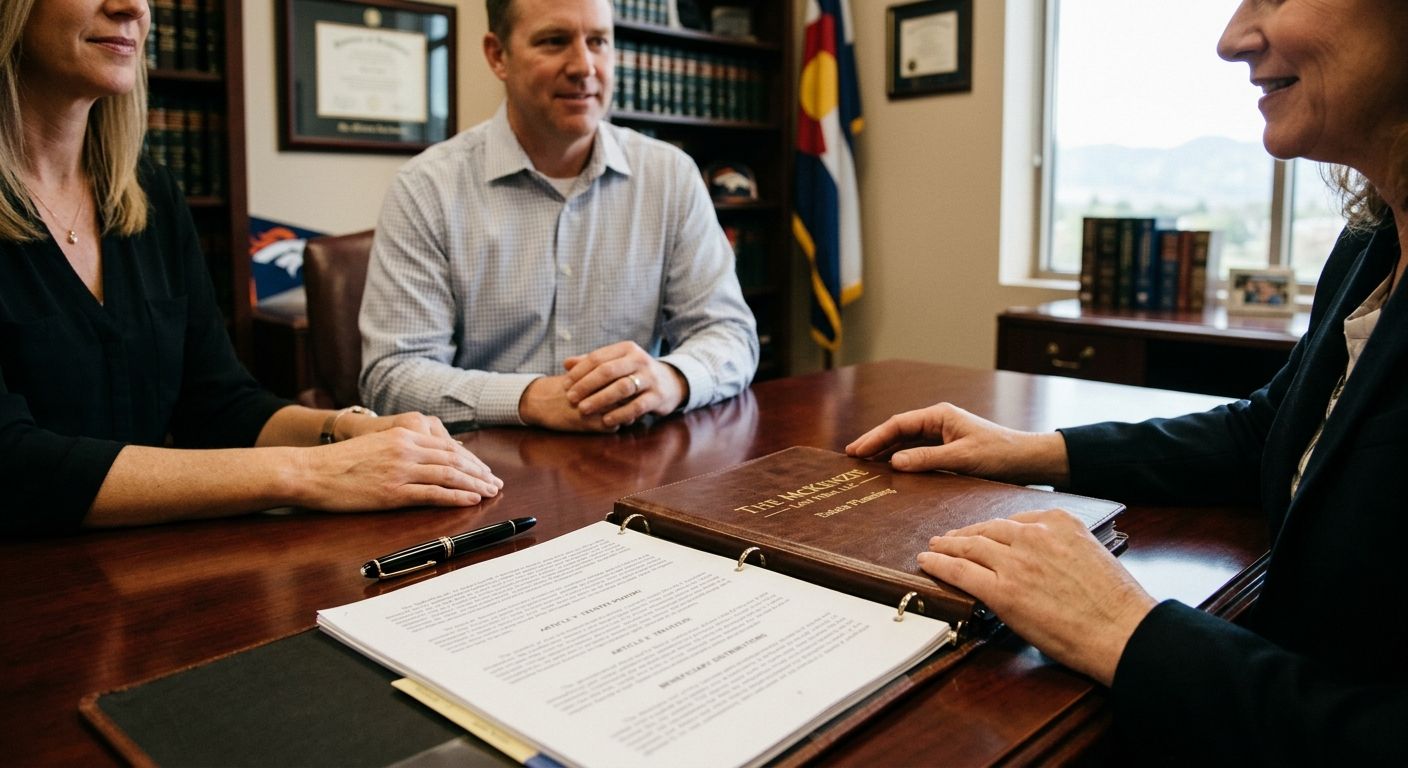
Discover what happens if a trustee misuses funds in Colorado. Learn about trustee personal liability, legal consequences, and how to protect family trust assets.,

Wondering if you can use a deceased parent’s debit card to pay their final bills? Learn why doing so can cause legal trouble and how proper estate planning helps.

Think writing a will keeps your estate out of court? Learn why a will does not avoid probate in Colorado and how proper planning protects your family’s legacy.

Learn what documents you need for medical incapacity in Colorado, including medical powers of attorney and living wills. Contact The McKenzie Law Firm, LLC today.

Learn how to choose a successor trustee for your Colorado estate plan. Discover key tips to protect your family and manage assets smoothly in the Denver metro area.
Discover why a residuary clause in a will is essential to protect unlisted assets like homes and retirement accounts from probate court in Colorado.

Discover the essential powers of a successor trustee in Colorado, from managing investments to covering healthcare costs, and how to protect your family's assets.